
- The company, in collaboration with Enagás Renovable, gives the green light to the construction of its large 100 MW electrolyzer in Cartagena, in which it will invest more than 300 million euros.
- The Cartagena electrolyzer has been selected by the European Commission as a strategic project of common European interest and will receive funding.
- The new facility will have the capacity to produce approximately 15,000 tons of renewable hydrogen annually and will prevent the emission of up to 167,000 tons of CO2.2 every year.
- Repsol is the country's main producer and consumer of hydrogen and has a presence throughout the renewable hydrogen value chain.
Project update – December 2025.
Repsol continues to make solid progress in its strategic plan and has given the green light to its first large-scale electrolyzer, a 100 MW facility, at its Cartagena industrial complex. The plant will have the capacity to generate up to 15,000 tons of renewable hydrogen each year, which the company will use as a raw material to manufacture essential products with a lower carbon footprint, taking a significant step in its roadmap to replace conventional hydrogen with renewable hydrogen at its industrial sites.
The project has been recognized by the European Commission and the Government of Spain as strategic and of common European interest (IPCEI) and will receive 155 million euros, through the Institute for Diversification and Energy Saving (IDAE).
Due to its scale, the development of this electrolyzer represents a technological challenge led by Repsol, in collaboration with Enagás Renovable, which holds a 25% stake in the project. With an investment exceeding €300 million, it will generate approximately 900 direct, indirect, and induced jobs throughout the project's various phases. The electrolyzer alone will prevent the emission of up to 167,000 tons of CO2.2 per year, an impact similar to that of two-thirds of the entire fleet of pure electric vehicles in Spain in 2024.
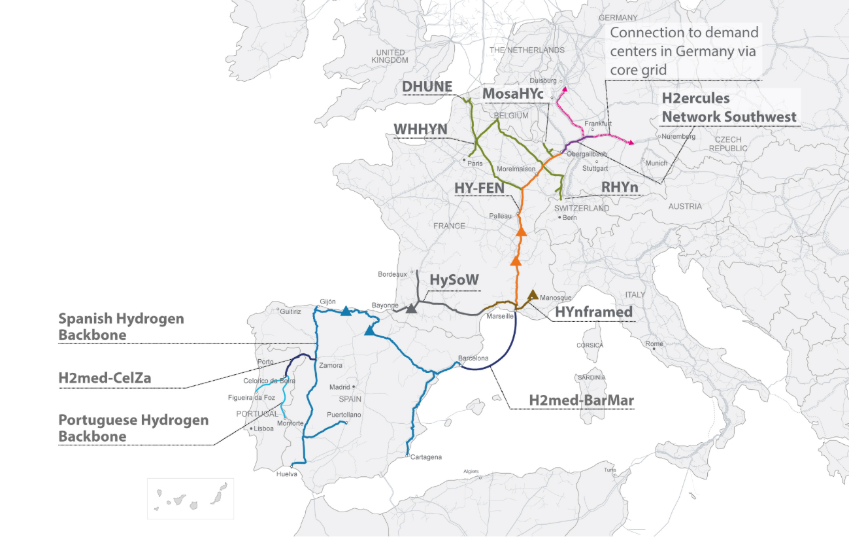
The plant is scheduled to be operational in 2029, representing a milestone for the Hydrogen Valley in the Region of Murcia, one of Spain's most significant regional initiatives. The goal is to create the most efficient ecosystem possible, aligning production capacity with industry needs. The project also envisions the possibility of integrating renewable hydrogen into the natural gas network and the Spanish Hydrogen Backbone Network in the future.
Repsol is the largest producer and consumer of hydrogen on the Iberian Peninsula, accounting for 601,000 tons of national production and supplying 41,000 tons of hydrogen consumed in Europe. Currently, its industrial facilities can generate approximately 360,000 tons of hydrogen per year.
Enagás Renovable, for its part, operates as an independent power producer specializing in renewable gases and decarbonization initiatives. Its current portfolio in Spain comprises 20 projects under development, focused on renewable hydrogen and biomethane.

Project CHYNEVision and Development
Repsol advances in its commitment to achieve net-zero emissions by 2050 with the transformation of its industrial centers into multi-energy hubs. A fundamental pillar of this strategy is the CHYNE project, promoted by the Cartagena Hydrogen Network consortium, led by Repsol together with Enagás Renovable.
This project, developed at Repsol's industrial complex in Cartagena, near the Escombreras Valley, represents a strategic commitment to renewable hydrogen as a key driver for the decarbonization of industry and mobility.
CHYNE It includes the installation of a 100 MW electrolyzer, which will produce renewable hydrogen through water electrolysis, using electricity from renewable sources contracted through PPAs. The plant will have the capacity to generate up to 15,000 tons of renewable hydrogen per year, avoiding the emission of up to 167,000 tons of CO₂ annually.
The facility will be located at Repsol's Cartagena refinery, allowing for direct integration with existing industrial processes. The hydrogen produced will primarily be used to replace some of the gray hydrogen currently used in processes such as hydrotreating and hydrocracking.
The CHYNE project has been recognized as Important Project of Common European Interest (IPCEI) within the Hy2Use program, which underscores its strategic importance for the innovation and competitiveness of European industry, as well as its contribution to the European Union's climate and energy objectives. This distinction also facilitates its integration into the future Spanish and European hydrogen network, as part of the European Hydrogen Backbone, which seeks to connect the main renewable hydrogen production and consumption centers in Europe.
CHYNE is part of Repsol's ambitious strategy to achieve an installed capacity of up to 1.2 GW of renewable hydrogen equivalent by 2030, consolidating its leadership in the energy transition. In Cartagena, the electrolyzer will contribute to the creation of one of the first renewable hydrogen industrial clusters in Spain, with a direct impact on local industry, employment, and technological development.
Ultimately, CHYNE represents a model of industrial transformation, demonstrating how public-private collaboration and the commitment to clean technologies can accelerate the transition to a decarbonized economy, generating long-term environmental, economic, and social benefits.